
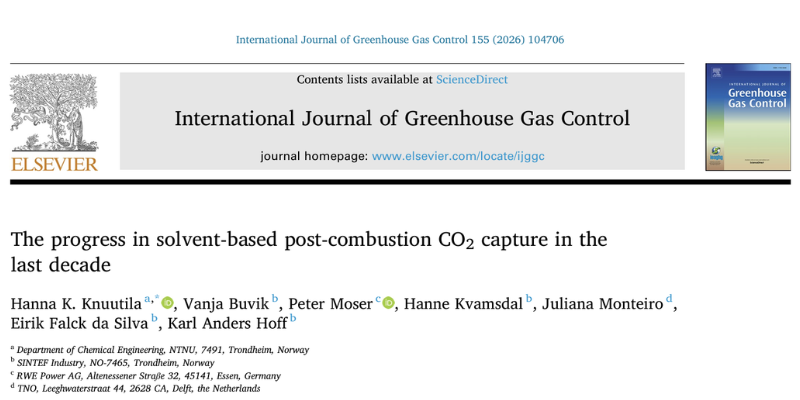
Abstract
Carbon dioxide emissions present a significant obstacle to mitigating climate change. Carbon capture, utilisation, and storage (CCUS) technologies, in conjunction with renewable energy and enhanced energy efficiency, offer pathways to reduce emissions and achieve net-zero industrial production. However, many industrial processes remain reliant on fossil fuels, complicating decarbonisation efforts in sectors such as metallurgy and cement production. This article reviews research advancements in absorption-based CO₂ capture technologies from 2015 to 2025 and examines future directions for economically viable and sustainable solutions. Although traditional amine-based absorption processes have been widely implemented, they encounter challenges including high energy requirements for solvent regeneration, solvent degradation, and equipment corrosion. Over the past decade, extensive testing and piloting of advanced emission control and solvent management technologies with high capture rates have aimed to enhance operational predictability and reduce both degradation and costs. Additionally, research has focused on the development and management of new solvent systems, their performance, and CO₂ purity control. Recent efforts have also emphasized dynamic modeling, process control, and the critical role of high-quality experimental data from pilot and laboratory studies in model development.
Authors: Hanna K. Knuutila, Vanja Buvik, Peter Moser, Hanne Kvamsdal, Juliana Monteiro, Eirik Falck da Silva, Karl Anders Hoff .
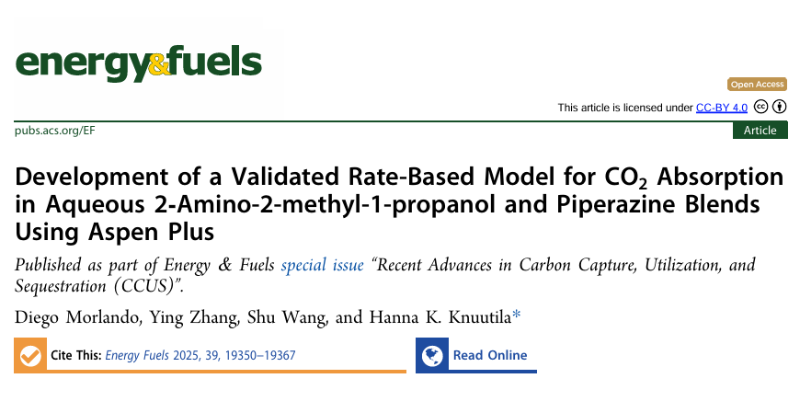
Publication – Development of a Validated Rate-Based Model
Abstract In this work, we developed a new e-NRTL thermodynamic framework for CO2 absorption in aqueous mixtures of 2-amino-2-methyl-1-propanol (AMP)…
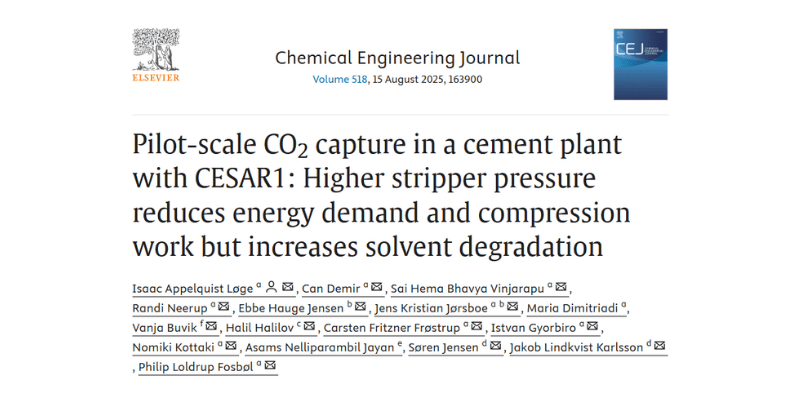
Publication – Pilot-scale CO2 capture in a cement plant with CESAR1
Abstract Carbon capture from hard-to-abate industries is essential. This study investigates the effect of stripper pressure on the performance of…
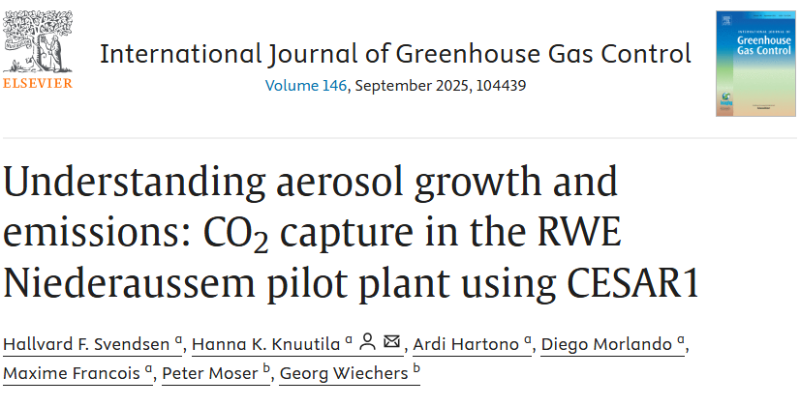
New Publication: Aerosol Modeling in CO2 absorption using CESAR1
We are proud to announce that Hallvard F. Svendsen, Hanna K. Knuutila, Ardi Hartono, Maxime Francois and Diego Morlando at…

Thermodynamic Properties of CO₂ Absorption in CESAR1 — Essential Data for Better Process Modelling
We are proud to announce a new scientific publication from the AURORA project, authored by Diego Morlando, Ardi Hartono and…
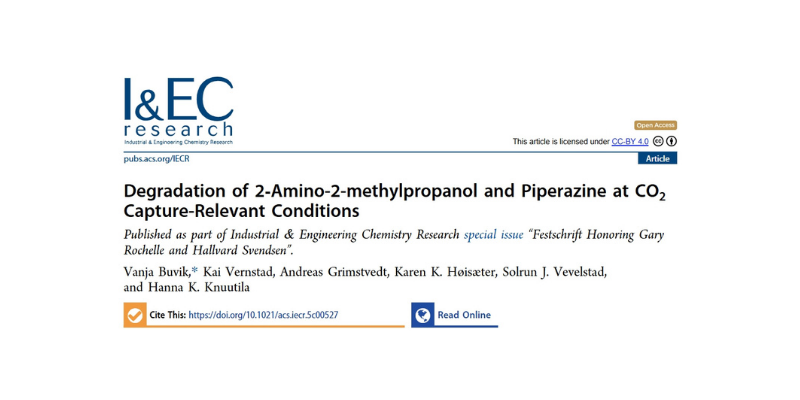
Journal Publication – In-Depth Study of CESAR1 Solvent Degradation Under CO₂ Capture Conditions
A new scientific publication based on research from the AURORA project has just been released in the journal Industrial &…
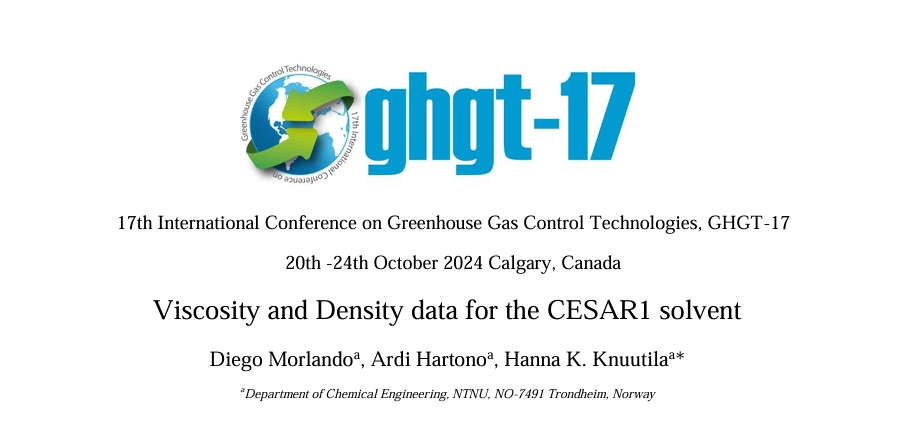
Conference publication – GHGT-17: Viscosity and Density data for the CESAR1 solvent
Abstract Global warming is a major issue that needs to be addressed and limited. The CESAR1 solvent blend has a…
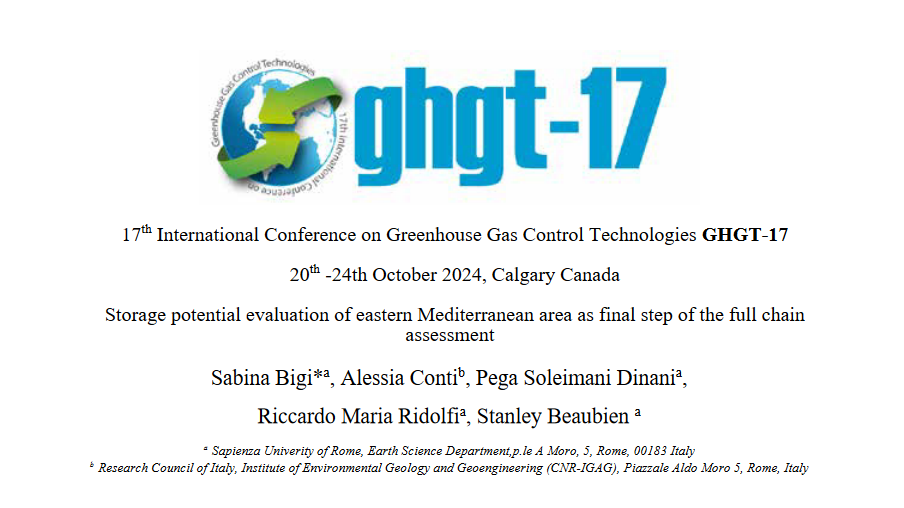
Conference publication – GHGT-17: “Storage potential evaluation of eastern Mediterranean area as final step of the full chainassessment”
The final step in capturing and storing carbon dioxide (CO₂) emissions is geological storage, where CO₂ is injected deep underground…
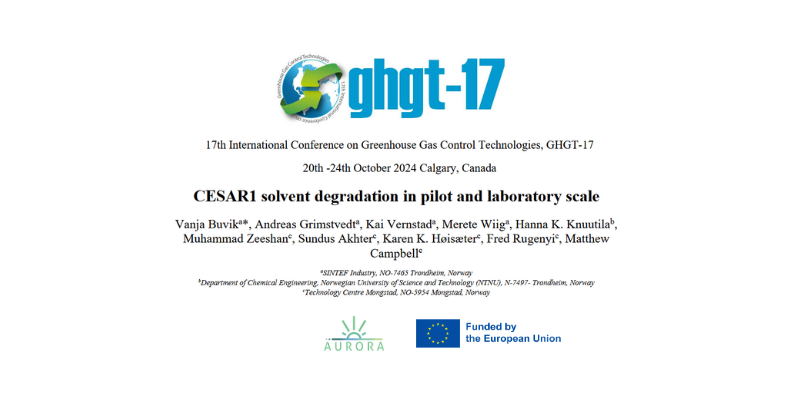
Understanding Solvent Degradation in CO₂ Capture – CESAR1 Solvent Degradation in Pilot and Laboratory Scale
The fight against climate change requires innovative solutions, and one promising method is CO₂ capture and storage (CCS). CCS involves…

Turning Waste Into Opportunity: Thermal Reclamation Chemistry of Common Amine Solvents
CO2 capture technology is vital for reducing greenhouse gas emissions. But what happens when the chemicals used in this process…

Closing Knowledge Gaps – Density and Viscosity of Unloaded and CO2-loaded Aqueous AMP-PZ blends
AURORA’s latest scientific journal publication provides experimental density and viscosity data on different unloaded and CO2-loaded aqueous blends of 2-amino-2-methyl-1-propanol…